
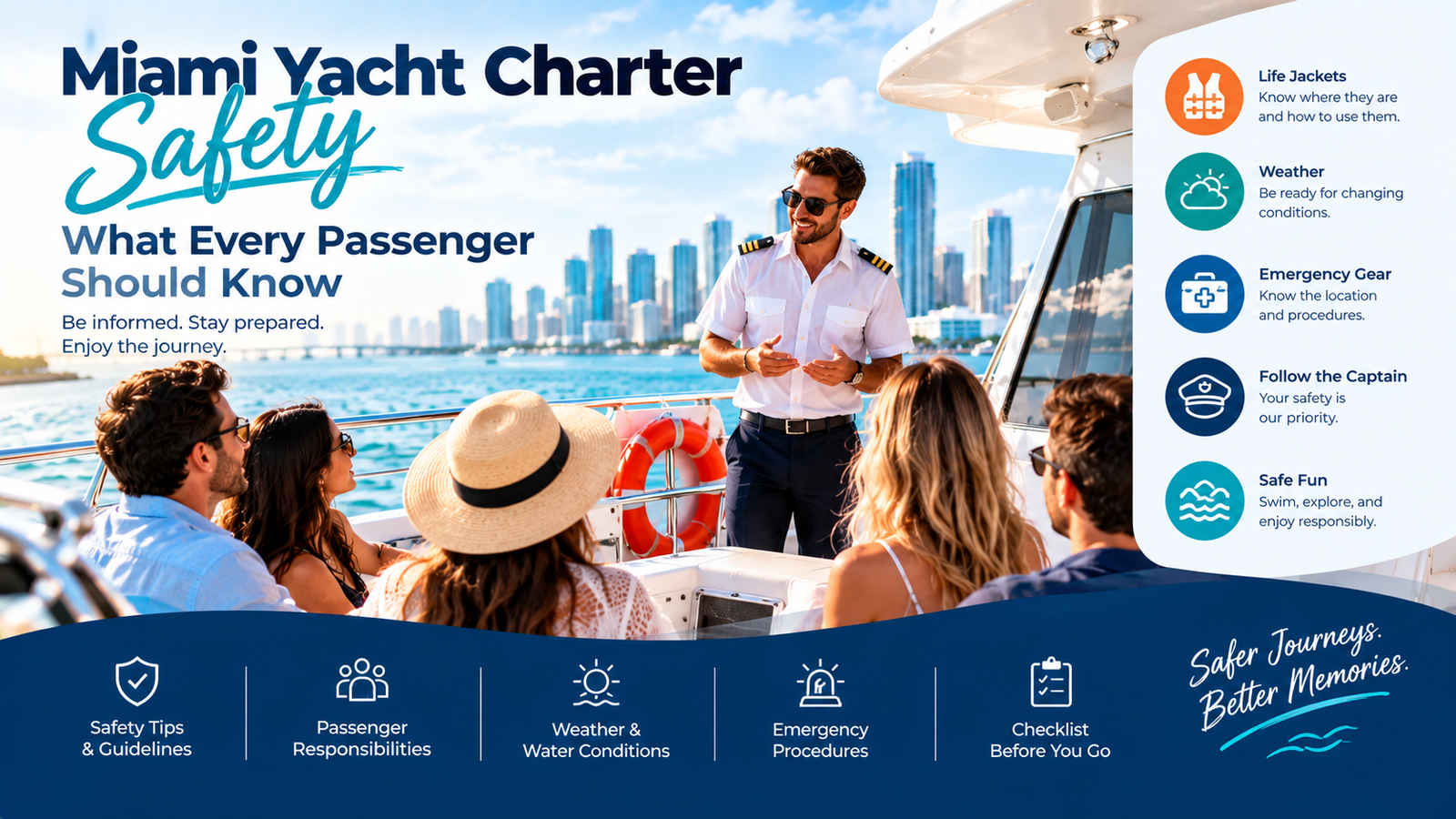
A day on the water in Miami is easy to enjoy. The skyline, the bay and the breeze do most of the work. But a boat isn’t a restaurant or a hotel lobby, and a few things that don’t matter on land matter a lot at sea: where the life jackets are, who’s in charge, how the weather is shifting and how you move around a deck that’s never perfectly still.
That’s why Miami yacht charter safety is worth a few minutes of your attention before you ever step on the dock. Safety on a private yacht charter Miami trip depends on the condition of the vessel, qualified operation, the weather, the equipment onboard and how passengers behave. It’s a shared responsibility between the captain, the crew and you. This guide covers what to check beforehand and what to do once you’re aboard.
Check the Company and the Yacht Before You Book
Safety starts before the reservation is confirmed. A polished photo doesn’t tell you much about how a vessel is run, so look at the operator as well as the boat.
- The company. Read recent reviews, look for clear information about its services, and notice whether it explains booking and safety requirements plainly. If something important is missing, ask.
- The vessel. Ask for current photos, confirm the permitted passenger capacity, and ask about onboard facilities and safety equipment. Make sure the yacht you’ll actually be on matches the listing.
- The arrangement. Find out whether a captain is included, who is responsible for operating the vessel, whether extra crew is available, and what the departure point, duration and planned route are.
A luxurious look doesn’t prove a boat is safe. Professionalism, vessel condition and clear safety arrangements matter more. Our article on how to choose a yacht rental company in Miami goes deeper on vetting a provider, and what to know before booking a yacht rental in Miami covers the practical questions to ask. If you’re comparing a Miami yacht charter against others, safety information should be part of that comparison.
The Captain’s Role
The captain is at the center of a safe charter. They operate and navigate the yacht, choose routes and speeds based on water conditions, traffic and weather, and may change the itinerary if conditions shift. The captain or crew should also explain important onboard procedures and make emergency instructions clear before you leave the dock.
As a passenger, you can help by:
- Staying within the permitted passenger areas
- Following instructions during docking and departure
- Not distracting the captain while the yacht is underway
- Cooperating when the captain asks for changes for safety reasons
One rule is worth repeating: never pressure a captain to continue a route, speed or activity they consider unsafe. They have the final say, and that’s how it should be.
Safety Equipment You Should Know About
Equipment varies from vessel to vessel and depends on applicable requirements, so ask the operator what’s on your specific yacht. Before you leave the dock, you should at least know about the following.
Life jackets. Ask where they’re stored, and confirm there are appropriate sizes for everyone aboard. Make sure you know how to put one on correctly. Children should have properly fitted flotation devices where required and appropriate.
Fire extinguishers. Know where they are and keep access clear. If a fire-related issue comes up, follow the crew’s instructions.
First-aid kit. Ask whether one is available. If someone has a medical concern, tell the captain or crew right away and let them manage it.
Communication and emergency gear. Depending on the yacht, this may include a marine radio, signaling devices, navigation and communication systems and emergency lighting.
Don’t Skip the Safety Briefing
It’s tempting to tune out the briefing, especially if you’ve been on boats before. Don’t. Layouts and procedures differ from one vessel to another, and the briefing is where you learn the ones that apply to this boat.
A good briefing covers where the life jackets are, emergency exits and access routes, basic onboard rules, safe places to sit and stand, how to move around the vessel, what to do if someone falls overboard and how to alert the captain and crew. If anything is missing, ask:
- Where are the life jackets?
- What should passengers do in an emergency?
- Are there areas guests must avoid?
- What’s the procedure for children onboard?
- Where should passengers stay during docking?
Boarding and Moving Around the Yacht
Most onboard injuries are ordinary slips, trips and falls, so a bit of care goes a long way.
When boarding, wait for permission before stepping on, use the designated boarding area and hold handrails where there are any. Don’t try to carry too many bags at once, and follow the crew’s directions when stepping between the dock and the yacht.
On deck, walk carefully, especially when the yacht is moving. Use handrails and walkways, and don’t run or jump between seating areas. Keep walkways clear of bags and belongings, and wear footwear that fits the operator’s recommendations.
On stairs and access points, hold the handrail and take extra care when the vessel moves. Keep an eye on children around stairs and open deck areas, and stay out of restricted spaces.
Weather and Water Conditions in Miami
Weather can change quickly on the water, so it’s part of the safety picture both before and during your trip.
- Before you go. Check the forecast for your charter window and ask the operator what conditions to expect. Remember that sunny skies don’t guarantee calm water, and conditions can change after you leave.
- Thunderstorms and lightning. Sudden storms can affect visibility and water conditions. If the weather turns, follow the captain’s instructions, and don’t insist on continuing an outdoor activity when conditions are unsafe.
- Wind and rough water. Wind affects how the yacht moves and how comfortable you are. When asked, stay seated or hold on to secure handholds, and avoid moving around more than necessary.
- Heat and sun. Drink water regularly, wear sunscreen, take breaks in shaded or indoor areas and watch for signs of overheating.
If conditions are unsafe, the captain may delay departure, adjust the charter or cancel it. Review the company’s weather, cancellation and rescheduling policies before you pay a deposit. Our guide to morning vs afternoon vs sunset yacht rental in Miami also touches on how time of day affects heat and weather.
Swimming and Water Activities
Swimming isn’t automatically included or allowed on every charter. Ask first, and follow the captain’s instructions about where and when it’s safe.
- Confirm that swimming is permitted and whether the yacht has suitable access equipment.
- Never enter the water without permission.
- Stay away from moving vessels, and avoid areas with unsuitable currents, traffic or other hazards.
- Use appropriate flotation equipment when required.
- Never swim alone.
Alcohol and swimming don’t mix. Alcohol affects judgment, balance and coordination, so avoid swimming after drinking, and follow any restrictions the captain sets. For children, keep them under close adult supervision, use properly fitted flotation devices when appropriate and don’t let them into the water without permission and supervision.
Alcohol, Food and Passenger Behavior
Check the operator’s alcohol policy before departure. If drinking is allowed, keep it moderate. Anyone operating a vessel should never do so under the influence, and everyone should follow the captain’s restrictions and applicable laws.
A few other habits keep the deck safer: keep food and drinks away from areas where they could create a hazard, avoid putting glass containers in unsafe spots and clean up spills quickly or tell the crew. Stay hydrated in hot weather. As for general conduct, don’t run or push, don’t climb on railings or restricted structures, keep hands and feet away from mechanical equipment, never interfere with navigation or controls and respect the crew’s safety instructions.
Safety for Families and Children
Many families enjoy a private charter, but a little extra planning helps.
Before booking, confirm the yacht suits children, ask about capacity and child safety arrangements, check that properly sized life jackets are available and ask about shaded and indoor space.
During the trip, supervise children at all times and explain the basic rules before you leave. Keep them away from railings, stairs and restricted areas, and follow the crew’s instructions when boarding and docking.
When preparing, bring suitable clothes and sun protection, pack water and approved snacks, think about whether the charter length suits younger passengers and tell the operator about any special requirements ahead of time.
What to Do in an Emergency
The captain’s emergency plan comes first, and what happens depends on the incident and the vessel. These are general steps for passengers, not a replacement for the crew’s procedures.
- Someone falls overboard. Alert the captain and crew right away, point clearly toward the person and keep them in sight. Follow the crew’s instructions, and don’t jump in unless qualified responders direct it.
- Illness or injury. Tell the captain or crew, give them relevant details and follow their first-aid and emergency procedures. Don’t move an injured person unless there’s immediate danger or the crew asks you to.
- Fire. Alert the crew, follow the captain’s instructions and move away from the affected area as directed. Don’t try to use fire equipment unless you’re told to and it’s safe.
- Mechanical problems. Stay calm, follow the captain’s instructions, stay in the designated safe areas and don’t touch equipment or controls.
What to Bring
- Sunscreen and sunglasses
- Drinking water
- Clothing suited to the weather
- Non-slip footwear, if recommended
- Personal medication, if needed
- Phone and a portable charger
- Motion sickness supplies, if appropriate
- Identification, if the operator requires it
Check the company’s rules on bags, footwear, food, drinks and personal equipment before departure.
Common Safety Mistakes to Avoid
- Ignoring the safety briefing
- Boarding before getting permission
- Assuming the life jackets are somewhere obvious
- Walking around carelessly while the yacht is moving
- Letting children roam unsupervised
- Swimming without the captain’s approval
- Drinking too much
- Brushing off weather warnings
- Blocking walkways and emergency equipment
- Distracting the captain during navigation
- Assuming every yacht has the same equipment and procedures
Quick Safety Checklist
- Research the charter company and read recent reviews.
- Confirm the actual yacht and passenger capacity.
- Ask about captain and crew arrangements.
- Confirm appropriate life jackets are available.
- Learn where emergency equipment is stored.
- Listen carefully to the safety briefing.
- Check weather and sea conditions.
- Follow safe boarding and movement rules.
- Confirm the rules on swimming and water activities.
- Keep children supervised.
- Drink responsibly and stay hydrated.
- Follow all captain and crew instructions.
Frequently Asked Questions
Is a private yacht charter in Miami safe?
It can be, when the vessel is properly operated, safety equipment is available and passengers follow instructions. Check the operator’s safety arrangements before you book.
Are life jackets available on Miami yacht charters?
Confirm that suitable life jackets are available for everyone aboard. Ask where they’re stored and how to use them during the briefing.
Should passengers attend the safety briefing?
Yes. It explains where safety equipment is, how to move around the yacht and what to do in an emergency.
Can you swim during a Miami yacht charter?
That depends on the yacht, the captain’s approval, the location, the weather and applicable rules. Never enter the water without permission.
Is a yacht charter suitable for children?
Some are, but arrangements vary. Confirm child safety equipment, passenger capacity and supervision requirements before booking.
What happens if the weather becomes unsafe?
The captain may change the route, delay the trip or return to a safe location. The operator’s weather policy determines how cancellations or rescheduling are handled.
What should I do if someone falls overboard?
Alert the captain and crew immediately, keep the person in sight and follow the crew’s instructions. Don’t jump in unless qualified responders direct you to.
Enjoy the Day, and Keep Safety in the Plan
Good safety habits don’t take much effort: check the company and the vessel, understand the captain’s role, listen to the briefing, know where the life jackets are, keep an eye on the weather and follow the rules for swimming, drinking and moving around. Keep children supervised and tell the operator about any special needs. Treat the crew’s instructions as part of the experience, not an interruption to it.
Planning a trip? Review the vessel details, ask about onboard safety arrangements and confirm the charter requirements before booking. You can start by browsing yacht rental Miami options, or look at Miami yacht rental with captain choices if you want an experienced crew handling the boat.